Black Women's History of Butler University, 1855-1948
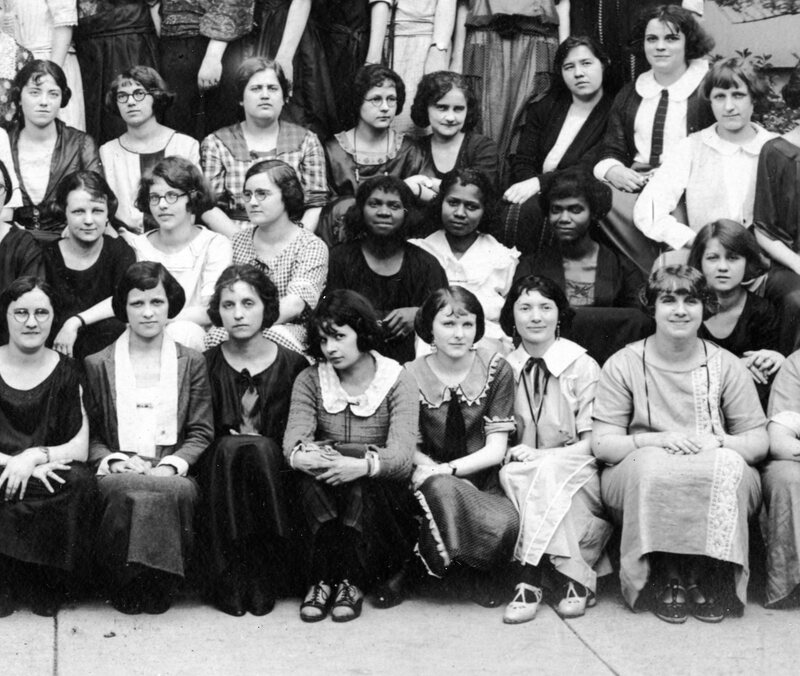
This exhibit is based on a presentation given during Founder's Week 2026 by Annie Benefiel, Head of Special Collections, Kyle Stearns, University Archivist, and Tabitha Barbour '17, Sigma Gamma Rho. The exhibit documents the accomplishments of some of the early Black Butler Alumnae from the founding of the University to 1948.
The exhibit is a collaborative work, drawing on the research of Kyle Stearns, University Archivist, Megan McKee, Special Collections Assistant, Dr. Sally Childs-Helton, former Head of Special Collections and Professor Emeritus, and Eli(se) Davidson, Butler University Student.
References
Butler University Archives, Indiana State Archives, Ferdinand News, Uebelohor Family, Randall Wright, Parke County Historian, Newspaper.com (INSPIRE), Hoosier State Chronicles, The Indianapolis Recorder, Indiana University Indianapolis Digital Collections, Ancestry.com, and Sigma Gamma Rho Sorority, Inc.
Butler History and Campuses, 1855-1928
Ovid Butler founded the North Western Christian University in 1850, as an institution of higher education aligned with the values of the Protestant Disciples of Christ Church. The school was founded to give members of the Disciples of Christ in Indiana and surrounding states an alternative to Bethany College in West Virginia, which was then a slave-holding state. Many members of the Disciples of Christ were abolitionists, including Ovid Butler, and the charter clearly stated Ovid’s intent to create a school that was open to all, regardless of race.
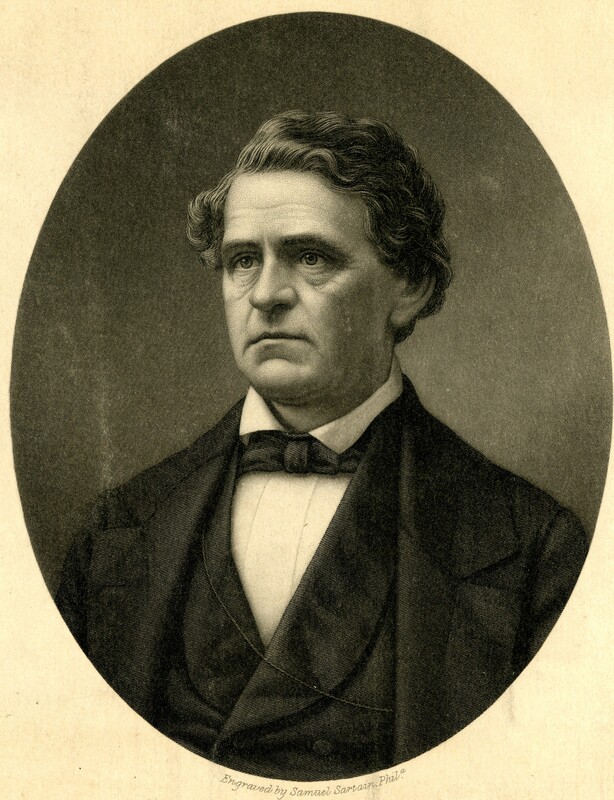
Butler, shown here on the left, was instrumental in getting the school started. He was a lawyer, abolitionist, newspaper publisher, land developer, and university founder. The first graduating class of North Western Christian University had in its student body both men and women who had been expelled from Bethany College in West Virginia, or their abolitionist beliefs.
In an unpublished essay entitled “Women’s Rights,” Butler expressed his unorthodox approach to the university:
“My desire is that the Institution of the North Western Christian University occupies a position in the front ranks of human progress and Christian civilization as the Experiment and Advocate of the common rights of humanity without distinction on account of sex, race or color. This position recognizes the absolute equality before God and before the Law of the individual members of the human family.”
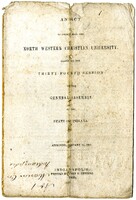
Pictured here is the University’s Charter, dated 1850, which is held in the Butler University Archives.
The charter set Ovid Butler’s progressive vision of education into motion. When North Western Christian University opened its doors in 1855, it admitted women and people of color in addition to white men, a radical policy for the time. While the degree programs offered were separated by gender, the school was not segregated by race.
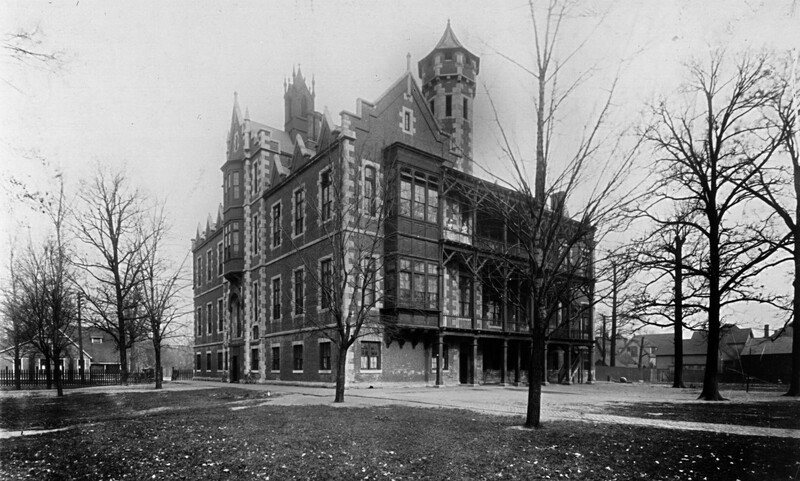
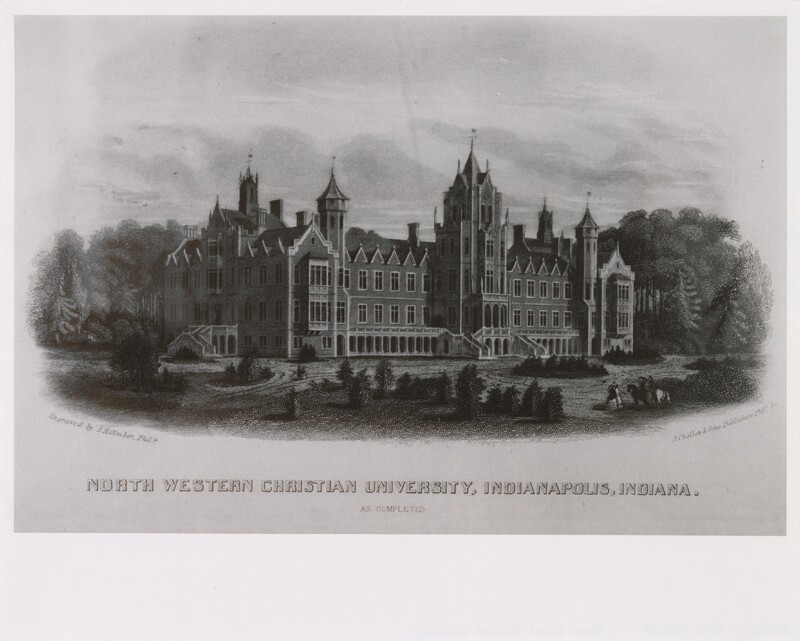
The first campus for Butler University officially opened in 1855, and was located on 25 acres of land known as “Forest Home” along what we now know as College Avenue in downtown Indianapolis. The land was donated to the university by Ovid Butler, and his house still stands today in that area of town, located near the I-65 and I-70 split. In fact, the campus was located where the current interstate highways sit.
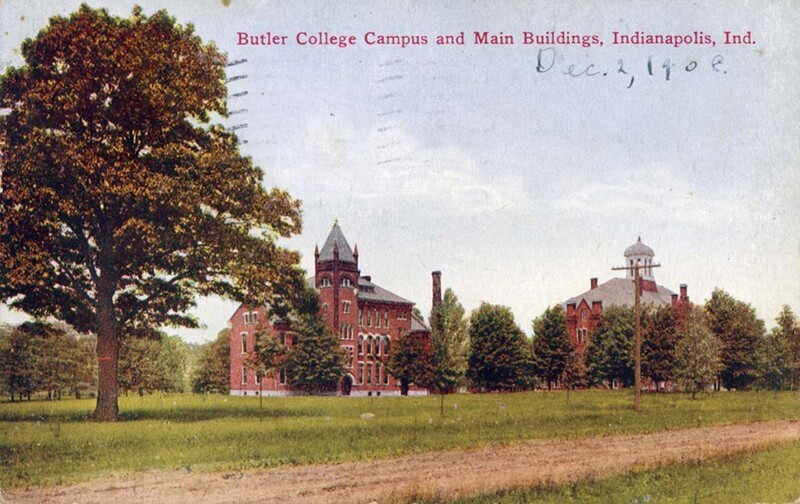
In the fall of 1875, the University moved to a new campus located in a recently incorporated town east of Indianapolis. In 1877, the university would be renamed Butler University in honor of its major financial supporter and primary founder Ovid Butler, despite his wishes to the contrary.
The new location was home to an academic and administrative building, a women’s residence house, observatory, power plant, gymnasium, athletic complex and a library.
Today the only remaining buildings today are the Bona Thompson Memorial Library and the College of Missions building, which now house the Irvington Historical Society and associated Historic Irvington Flats.
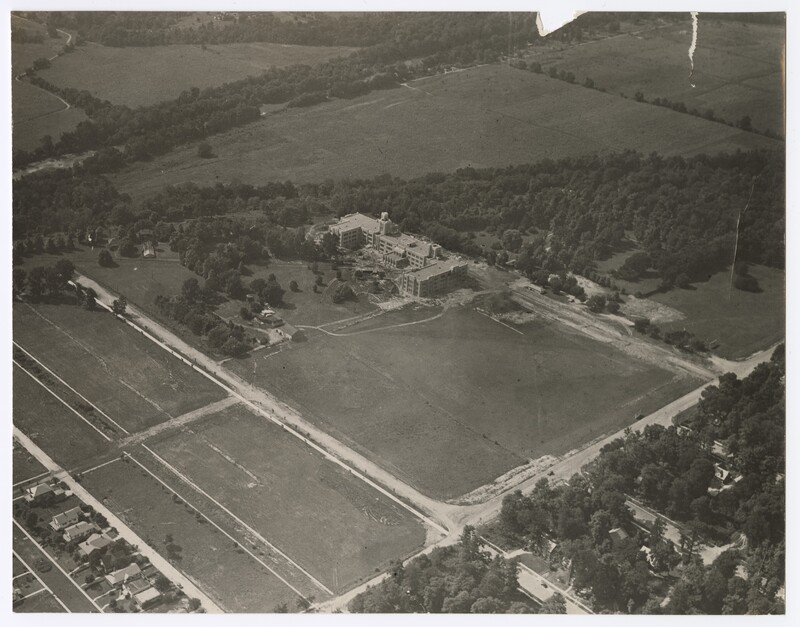
Following the acquisition of Fairview Park, formerly a trolley park owned by the Indianapolis Street Railway Company, Butler University moved to our current campus in 1928. This aerial photograph shows the construction of Jordan Hall in 1928. The University opened that fall.
The Race Quota, 1927-1948
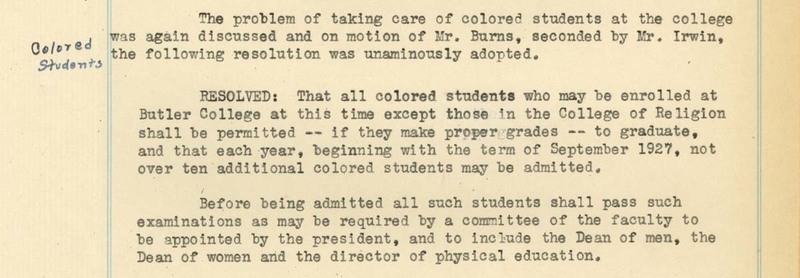
In 1927, Butler University President Robert Aley instituted a quota for Black students. The new policy allowed only ten students per year to be admitted, and the students had to have three letters of recommendations from prominent citizens. Some Black students got around the quota by enrolling in the School of Religion – now known as Christian Theological Seminary – which had no such quota.
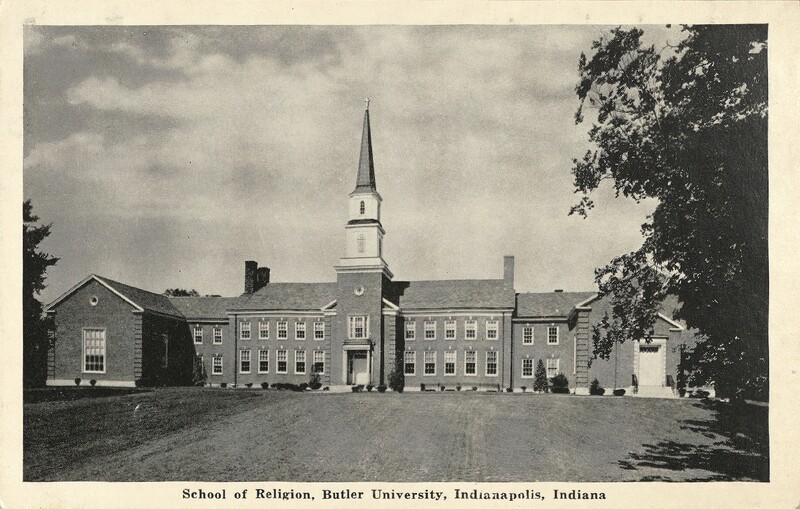
The reasons for creating the Butler quota are obscure in our records, as the Board of Trustees meeting minutes and other surviving university documents do not explain the motives of administrators for the creation of the quota. So whether they were acting on their own beliefs, or caving to racist political pressure from outside the institution, we just don’t know.
The quota system stayed in place until after World War II, when President M. O. Ross lifted it in 1948. The number of Black students did not increase significantly until the 1960s and the coming of the Civil Rights Era.
On September 15, 1948, the Executive Committee of Butler University recommended to the Board of Trustees the removal of the discriminating quota against black students.
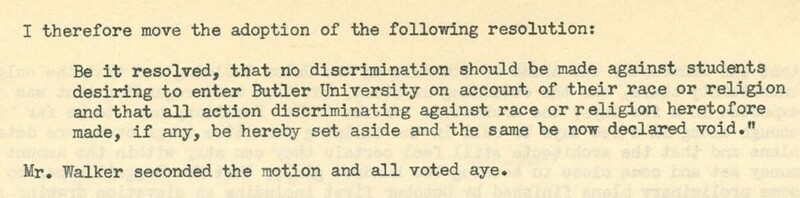
The resolution stated that “no discrimination should be made against students desiring to enter Butler University on account of their race or religion and that all action discriminating against race or religion heretofore made, if any, is hereby set aside and declared void.”
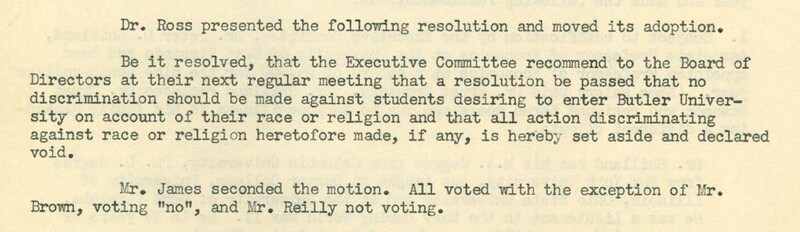
About a month later, on October 13, 1948, the Executive Committee presented the Board of Trustees with the resolution to remove the quota from Butler University. The Board of Trustees voted unanimously in favor of the resolution and the race quota policy was officially ended.
Though a few of the Black Alumnae presented here attended Butler University before the quota was enacted, most of the women in this exhibit attended during this period of explicit institutional discrimination. Their accomplishments and perseverence in the face of such racism is a testament to their determination and strength.