Fall 2026 issue
2026-11-10
The Fall 2026 issue of Vision is available! Vision 27.6 Small Harms and Their Repair
Read more about Fall 2026 issue
The Fall 2026 issue of Vision is available! Vision 27.6 Small Harms and Their Repair
Read more about Fall 2026 issue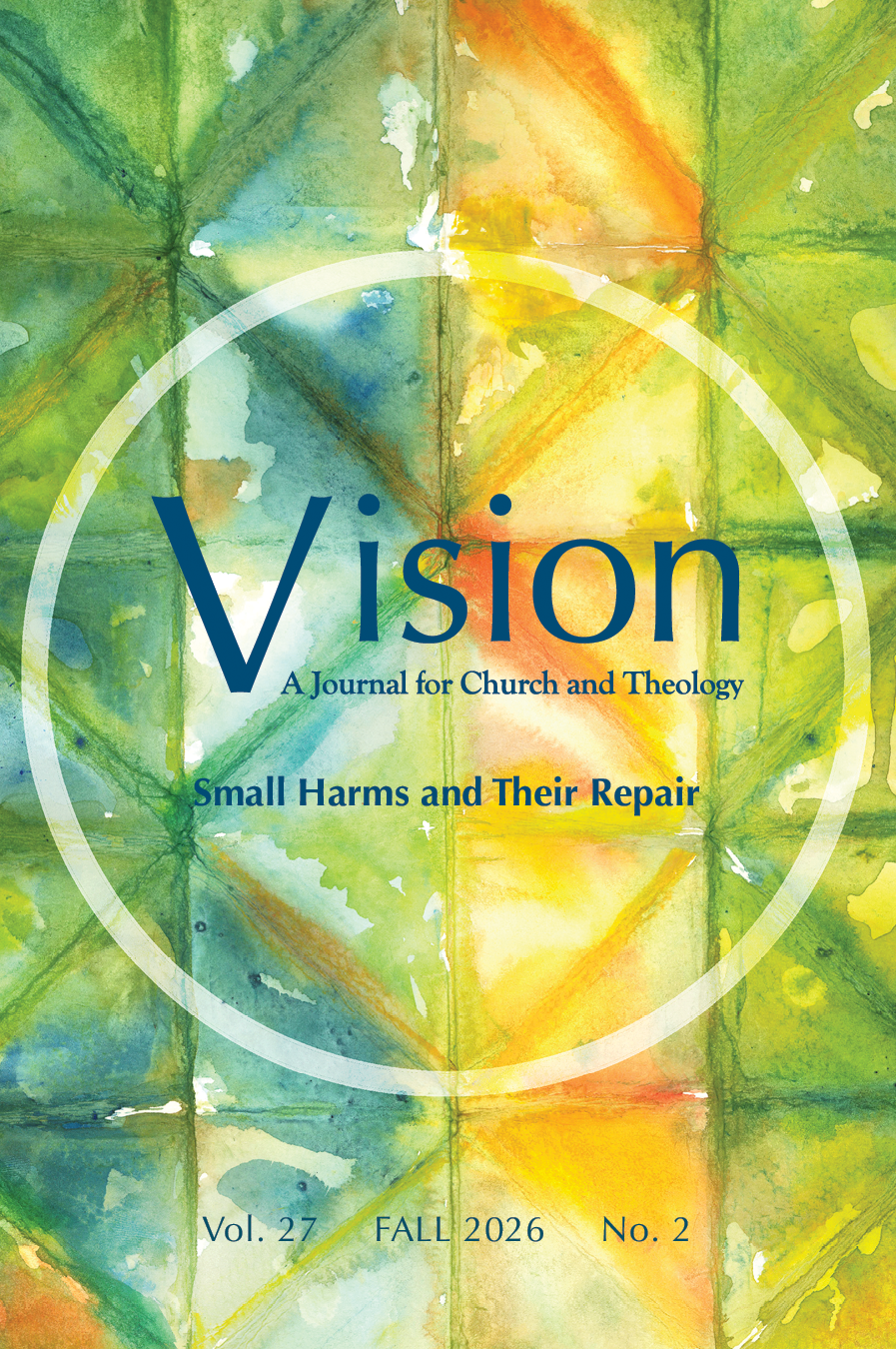
From the editorial:
This issue of Vision opens with an article by theologian-pastor Tim Peebles that proposes a conceptual map for categorizing “negative happenings” along a spectrum of intensity, from simple hindrances to severe horrors. By distinguishing between subjective impacts, objective outcomes, and the degree of moral agency involved, Peebles illustrates how misclassifying events distorts both personal and pastoral responses. Conflict mediator and consultant Betty Pries argues that peace theology must address the close-to-home dynamics of small harms rather than focusing exclusively on large-scale war. Grounding conflict resolution in a divine identity, she outlines several actionable practices for living out Anabaptist peace theology on the small scale. Pastor and activist Jonny Rashid writes a vulnerable personal reflection on the ways even “those who are working toward noble causes they believe in” can and do cause harm. Conrad Grebel University College professor Carol Penner follows this up with an invitation to spiritual maturity in the form of humility, Gelassenheit (yieldedness), and a posture of looking for the growth in love made possible when we bump up against our own and others’ less-than-ideal behaviors or attitudes.
Two Anabaptist Mennonite Biblical Seminary colleagues, Gilha Lee and Malinda E. Berry, tackle biblical and theological resources for thinking about harm and its repair, including the repair of small harms. Lee writes about Paul’s theology of reconciliation, which addresses the most unequal power dynamic possible: the divine-human one. Yet this reconciliation was achieved through genuine reciprocity that neither reinforced hierarchy nor led to unilateral surrender, a reality that helps us imagine how reciprocity might also unfold in unequal human relationships. Drawing on Julian of Norwich’s concept of “oneing,” Berry advocates for a colorful spectrum of salvation that embraces both personal and collective healing, encouraging faith communities to address daily slights through compassionate, incre-
mental grace.
MDiv student Catherine Bergs Mohr invites us to reflect on the unintended consequences of overly avoidant liturgical strategies such as eliminating “sin-talk,” abstracting confession, and banning physical touch. Though it is not their goal, these strategies can disenfranchise trauma survivors, erase moral agency, and enforce white, middle-class norms of decency. Bergs Mohr points out that, in an effort to do good for those who have experienced great harm, we may inadvertently undermine our collective capacity to recognize
the small harms every one of us perpetrates and lose the opportunity to build remediation muscles for both the everyday and the extraordinary. My own essay makes the case for what I call “small non-moral painful experiences”: things that, while they hurt, are not wrong. Particularly if we are unable to claim that such experiences exist, we may seek to remediate them with strategies that cannot succeed, looking for apologies when what we really need is reconnection. Pastor and writer Joanna Harader offers a contemplative, artistic prayer practice to help us discern and process small harms. A variety of church leaders write brief essays on the kaleidoscope of scriptures they return to again and again as they seek to repair harms both small and large. The issue closes with a prayer by Mary Schertz, seeking, by God’s grace and in God’s love, to practice forgiveness as a way of life.